Not an Exoneration!
Legal scholar Dr. Jamie Rowen explains why the House's procedural vote left eight impeachment allegations unresolved, what Congress can do next and why political accountability matters.
It was a surreal and sad Veteran's Day.
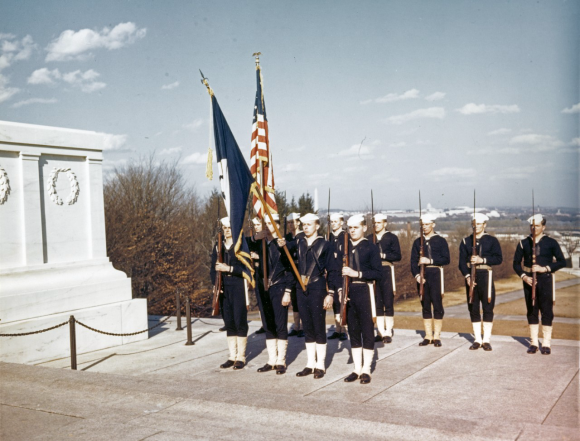
Just 48 hours after House Republicans had to resort to a procedural vote to block the impeachment of Secretary of Defense Pete Hegseth for high crimes and misdemeanours, CNN reported he and his cadre of advisors had to be publicly admonished by one of the honor guards for laughing after taking selfies at the Tomb of the Unknown Soldier, at Arlington National Cemetery, one of the nation's most sacred places.
The House of Representatives voted Tuesday to prevent an immediate impeachment vote against Defense Secretary Pete Hegseth. But contrary to President Trump's mischaracterization that was not an "exoneration'.
That House vote did not clear him of wrongdoing, reject the allegations against him or settle the constitutional questions surrounding his conduct.
That's the distinction Dr. Jamie Rowen, professor of legal studies and political science at the University of Massachusetts Amherst, emphasized while examining the House's handling of eight articles of impeachment introduced by Kentucky Republican Thomas Massie.
The resolution accuses Hegseth of violating federal law and the Constitution through unauthorized military operations, civilian deaths, extrajudicial killings and retaliation against a sitting U.S. senator.
The House voted 211–204 to refer those charges to the Judiciary Committee rather than consider them immediately.
What Did the House Actually Vote On?
The House did not vote on Hegseth's guilt, innocence or whether he should be impeached. Lawmakers voted on a motion introduced by California Republican Darrell Issa to send Massie's resolution to committee.
Rowen explained that referral is a normal congressional procedure, but one that can prevent legislation or impeachment resolutions from ever receiving a final vote.
"And the argument about sending it to committee is sometimes you need to work on a bill before you think it can get passed, but everybody knows that when it goes to committee, it's pretty easy to never bring it back to the floor for a full vote."
The motion passed with support from 210 Republicans and one independent. Opposing it were 203 Democrats and Massie, the only Republican to vote against referral.
Eighteen lawmakers did not vote, including 11 Democrats and seven Republicans.
Because the margin was seven votes, the Democratic absences immediately raised questions about party coordination. Had eight additional Democrats voted against the motion, with every other vote unchanged, the referral would have failed.
But Rowen cautioned against drawing conclusions without knowing why members were absent.
"I mean, the whole story is unclear to me about why the Democrats weren't there."
She noted that Republicans were absent, too, and raised the possibility that timing, rather than party discipline alone, contributed to the outcome.
The takeaway: The vote stopped an immediate impeachment decision. It did not resolve the allegations, and the absences alone do not establish why lawmakers failed to appear.
What Exactly Was Hegseth Accused of Doing?
Massie's 34-page resolution contains eight articles. Three concern military operations against Iran, while the others address civilian protections, maritime strikes, free speech, Venezuela and Yemen.
Article I: Unauthorized war against Iran. Directing military operations without congressional authorization.
Article II: Defying Congress's withdrawal directive. Continuing operations after Congress approved a resolution calling for U.S. forces to leave the conflict.
Article III: Exceeding the War Powers deadline. Continuing hostilities beyond the statutory time limit without authorization.
Article IV: Weakening civilian protections. Dismantling safeguards intended to prevent civilian casualties, allegedly contributing to a deadly strike on an Iranian elementary school.
Article V: Extrajudicial killings. Authorizing lethal attacks against suspected drug-smuggling vessels in the Caribbean and Eastern Pacific.
Article VI: Suppressing free speech. Allegedly retaliating against Senator Mark Kelly after he reminded military personnel they could refuse unlawful orders.
Article VII: Capturing Venezuela's president. Directing the military operation that seized Nicolás Maduro and his wife without congressional authorization.
Article VIII: Unauthorized war in Yemen. Directing extensive military strikes without congressional approval and allegedly failing to provide timely notification.
These are allegations made in the impeachment resolution, not findings established by Congress or a court.
Rowen stressed the importance of examining the underlying allegations even when the political process stops short of a final vote.
Does Congress Have the Power to Stop a President From Going to War?
The first three articles raise a fundamental question about the separation of powers.
The Constitution gives Congress the authority to declare war and the president responsibility for commanding the military. The War Powers Resolution of 1973 establishes procedures for congressional notification and limits on unauthorized military operations.
Rowen acknowledged that aspects of the law's constitutionality remain disputed. In particular, questions exist about whether Congress can compel presidential action through a concurrent resolution that does not become law through the ordinary legislative process.
But she emphasized that those legal disputes should not obscure Congress's constitutional role.
"The point of the impeachment articles is to educate the public that Congress is supposed to have war-making authority. It's in the Constitution. It's in the statutes that Congress passed overriding a presidential veto in 1973 by Nixon."
Her broader point was that Congress has an oversight responsibility, even when presidents challenge the mechanisms lawmakers use to exercise it.
If Congress is Ignored, Can The Courts Intervene?
One of Rowen's most important distinctions concerned the difference between judicial and political accountability.
A president's refusal to follow congressional direction does not necessarily produce a dispute that courts will resolve.
Rowen expressed skepticism that the Supreme Court would intervene in a confrontation involving military operations and national security.
"I don't see the option of turning to courts for this particular dynamic. I see this as a political move, and people need to make their voices loud and clear, as they did in this election."
She clarified that the absence of an effective judicial remedy does not mean Congress lacks political remedies.
Impeachment is one of those remedies. It allows Congress to address alleged misconduct by executive officials, including conduct that courts may be reluctant or unable to adjudicate.
The takeaway: A court is not necessarily the institution that will resolve a dispute between Congress and the president. Congress itself has constitutional tools for holding executive officials accountable.
Can Hegseth Be Held Responsible for Following Trump's Orders?
Rowen also addressed whether a defense secretary can refuse an unlawful presidential order.
She explained that international law recognizes individual responsibility for unlawful military conduct, even when an official acts under orders from a superior.
"And they created this doctrine that basically clarifies that you still have an obligation to follow international law even if your superior orders you to do something different."
That principle matters because Massie's resolution challenges Hegseth's own conduct, not simply the decisions of President Donald Trump.
It does not, however, establish that any particular order was unlawful or that Hegseth committed a crime.
What Happens When Democrats Take Control of The House?
Rowen explained that the incoming Congress could revisit the impeachment allegations after taking office in January 2027.
With Massie leaving Congress, another lawmaker would need to introduce a new resolution.
House Democratic Leader Hakeem Jeffries has made his position on Hegseth clear.
"He shredded the law and the Constitution with impunity, and there is no circumstance that justifies Pete Hegseth continuing to hold this position."
Asked about the approach Democrats would take, Jeffries said:
"We're gonna follow the facts, we're gonna apply the law, we're gonna be guided by the Constitution, and we're gonna let the chips fall where they may."
Jeffries expressed confidence in the work of Democrats on the Judiciary and Oversight committees, but his remarks did not establish a timetable for impeachment.
Rowen identified another challenge: Democrats will have to decide how much attention to devote to accountability investigations while addressing competing priorities, including healthcare and the cost of living.
What Should Americans Take Away From the Vote?
The outcome is narrower than either an impeachment or an acquittal.
Hegseth was not impeached. The House did not vote on the substance of Massie's charges.
He was not cleared of wrongdoing. Referral to committee is not a finding that his actions were lawful.
The allegations remain unresolved. They can still be investigated or raised in future impeachment proceedings.
The courts may not provide a remedy. Rowen emphasized the importance of Congress's political accountability powers.
The next Congress can revisit the issue. Whether it does so will depend on lawmakers' priorities and willingness to act.
The November vote demonstrated how congressional procedure can determine whether allegations against a senior government official receive a hearing.
For Rowen, the larger issue extends beyond Hegseth. The Constitution divides power among branches of government, but those limits depend on institutions exercising their authority.
Congress can decline to pursue impeachment. That decision does not, by itself, make the underlying conduct lawful.
That is what the House vote settled, and what it left unanswered.