What's Going On Friday with Jenna Flanagan
The US and Israeli war of choice continues to rage with devastating consequences with well over 2,500 deaths throughout the region, overwhelmingly mostly civilians including hundreds of children. Three weeks in and the UN Secretary Antonio Guterres was quoted as suggesting that both sides in the US-Israel war on Iran have likely already committed war crimes.
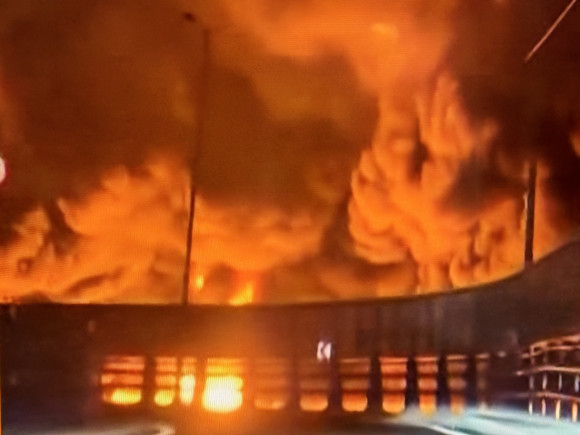
Israel's Wednesday strike on Iran's South Pars gas field was quickly countered by an attack by Iran on Kuwait's Mina Al-Ahmadi oil refinery. While President Trump dismissed the impact on the US economy of the rapid spike in oil prices, he derided the US's NATO allies as cowardly for not pledging to help secure the strategic strait of Hormuz through which 20 percent of the world's oil passes.
The Trump administration is reportedly weighing deploying US troops to occupy Iran's Kharg Island in the Persian Gulf that's 16 miles off Iran's coast that's the seaport through which 90 percent of Iran's petroleum exports flow.
In this episode we play an extended excerpt of this week's US Senate Intelligence hearing that included the annual national security threat review which usually focuses on global risks; including the war with Iran and the broader implications for US security.
The US Senate Intelligence Committee is chaired by Senator Tom Cotton, a Republican from Arkansas. Senator Mark Warner, a Democrat from Virginia is the ranking member. The excerpt includes exchanges between Direcotr of National Intelligence Tulsi Gabbard, CIA Director John Ratcliffe, and FBI Director Kash Patel.
Jenna spoke about the hearing with Jim Henry, Yale Global Justice Fellow who is an economist and journalist who specializes in geo-politics and the economy. Jenna and Jim discuss the inconsistencies in the Trump administration's rationale for the war on Iran and the significance of DNI Director Gabbard's role in the FBI seizure of ballots in Fulton County, Georgia from the 2020 Presidential election. This continued fixation on domestic elections comes with the shifting of intelligence resources from their traditional international focus to the Trump administration's mass deportation campaign.
In the second hour, we looked at a new report that documents the critical role immigrants play in our national and regional economy not just as essential workers but as the starters of businesses that engage millions of people. Lower Manhattan Councilman Chris Marte joined us for that conversation with David Dyssegard Kallick, with the Immigration Research Center, that issued the report "The Entrepreneurial Spirit: A Profile of Business Owners Across the United States."
According to the report, more than one in five business owners in the US are immigrants and "an ever more important role as 'Main Street' business owners, making up 27 percent of all Main Street businesses."
Council Member Marte recounts the central role of his lower Manhattan district in the American immigrant experience from the founding of the City of New York. Marte describes the chilling effect on his district that the Trump regime's violent mass deportation campaign is having on his constituents who often live in households where undocumented, green card holders as well as US citizens, can all live under the same roof.
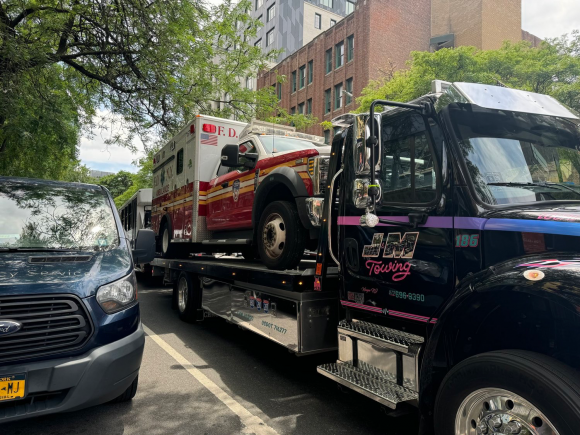
In the D Block, we review a study by the New York City Independent Budget Office that documents the significant rise in FDNY EMS response times across the city by borough for Advanced Life Support (ALS) or Basic Life Support (BLS) runs.
IBO analyst Valerie Gudino and Lt. Vincent Variale, president of DC 37 Local 3621, which represents FDNY EMS officers, joined Jenna to discuss IBOs findings.
"Overall, the percentages of both ALS and BLS calls for which a response arrived in 10 minutes or less has declined in all boroughs over the past decade, although not equally," according to IBO. "Over the decade, the steepest decline in ALS calls with response times below 10 minutes was in Manhattan with a 12 percentage-point decline (90% to 78%) from 2014 to 2024, compared with a 6 percentage-point decline in Staten Island (88% to 82%)
IBO found the percentage of ALS calls with response times less than 10 minutes was the best in Staten Island (82%), and the worst in the Bronx (75%).
"Overall end-to-end response times to the most serious calls have increased to almost 11 minutes in 2024. This is almost 2 minutes longer than the lowest average time over the decade, 8 minutes, and 56 seconds in 2017. Over the same period, average response times (only counting travel time post-dispatch) have also risen to 8 minutes and 16 seconds in 2024."
Lt. Variale told Jenna that the climb in EMS response times was linked to chronic staffing shortages caused by the job's high turnover rate linked to EMS members moving to the fireside of the department for much higher pay and superior benefits.
According to Variale, up to as many 60 FDNY ambulances can't be deployed on some days because of the lack of EMS personnel on hand.
Variale's union and DC 37 Local 2507, which represents FDNY EMTS, paramedics, and fire inspectors, have brought an employment discrimination case against the City of New York due the wide pay and benefit disparity between FDNY EMS and FDNY firefighters.